
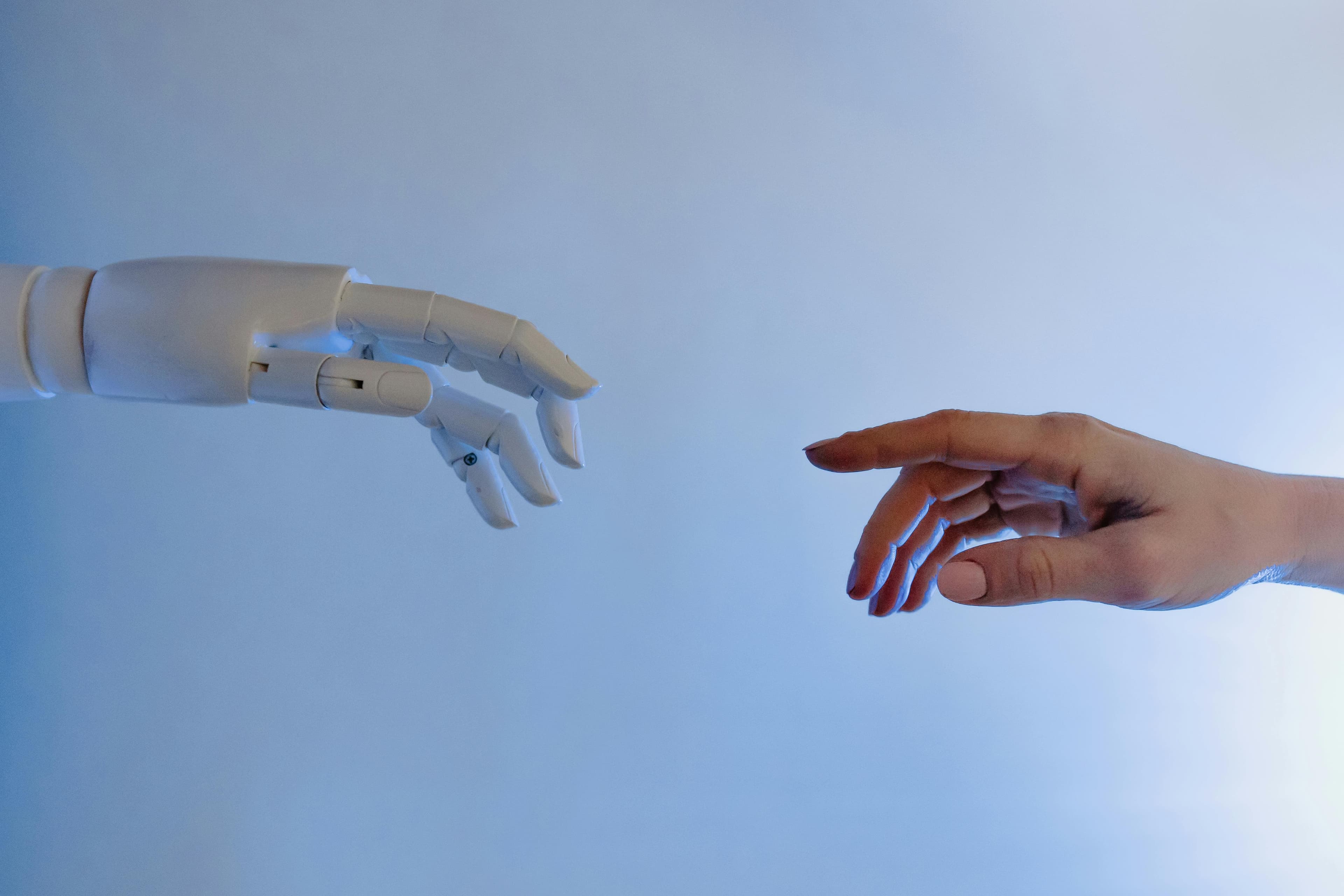
For all of computing history, software had one real actor: the user. In the age of autonomy, that relationship has evolved.
Agents don't just respond anymore. They reason, decide, and act. They spend money, access accounts, and make commitments — often without anyone watching. The one on the other end isn't clicking buttons. They're delegating authority to a machine and hoping it stays within bounds.
That means every agentic transaction now has two sides.
We already have a word for one side. Bot is universal — the computational machine that reasons, decides, and acts.
But we never named the other side — the one who said "go," who pays when it goes wrong, whose reputation gets attached to a machine's decisions. It's not the "user" — users click buttons. Not the "operator" — operators run systems. And not just "the human" or "the person" — those describe what you are, not your role in the transaction.
That role is the Bio — the biological being whose authority, money, and liability are on the line. It's a role, not a species.
A Bio is the one who delegated judgment, granted authority, and needs proof of what happened after.
That distinction is about to matter a lot.
Why the distinction matters
When a Bio buys a plane ticket, the world understands what happened. When a Bot buys a plane ticket, the world pretends the difference doesn't matter.
The airline charges the card. The confirmation gets issued. But was the itinerary pre-approved by the Bio, or did the Bot pick it autonomously? Was the spend within budget, or did the Bot decide the business-class upgrade seemed reasonable? If the Bio disputes the charge, what evidence exists that the Bot was authorized to make that commitment?
Right now, the answer is: none. The receipt looks identical whether a Bio clicked "buy" or a Bot decided to.
A Bot that answers questions is an assistant. A Bot that takes actions is an agent. And an agent that acts on behalf of a Bio — spending their budget, accessing their accounts, making commitments in their name — is exercising delegated authority. That's a fundamentally different relationship than typing a question into a chat window.
The industry talks about "human-in-the-loop" as if the only question is whether a Bio is watching. It's not. The question is whether the system can prove what the Bio authorized, what the Bot actually did, and whether those two things match.
What Bios need
A Bio needs three things from any system that governs their Bot.
Constraint. Not a system prompt. Not a natural language instruction that the Bot might follow. Cryptographically enforced boundaries — spending limits, domain restrictions, action approvals — that hold whether the Bio is watching or not. If the only thing standing between a Bot and an unauthorized action is the Bot's own compliance, the Bio has no real control.
Visibility. Not a log file. Logs tell you what happened. Bios need proof — signed attestations that a specific constraint was evaluated against a specific action and the result was permit, block, or escalate. The difference between a log and an attestation is the difference between "trust me" and "verify this."
Revocation. Not eventually consistent. Not "we'll get to it." When a Bio sees their Bot doing something wrong, they need a kill switch that works immediately — mid-action, mid-session, mid-delegation chain. Every downstream agent that derived authority from that Bio's approval should lose that authority the moment the Bio says stop. Delegated authority that can't be revoked isn't delegated authority. It's surrender.
What Bots need
A Bot without verifiable identity is just a request with good grammar. It can't prove who authorized it or what constraints govern its behavior. Every service it touches has to make a blind decision: let it in and hope for the best, or block it and lose the business.
Bots need infrastructure too.
Identity. Not a username. A Bot needs a credential that proves who it acts for, what it's allowed to do, and what constraints govern its behavior. Today, most agents operate with nothing more than an API key and an org name. That's not identity — it's access. Real identity means any service the Bot touches can verify its authorization before deciding whether to trust it.
Delegation. Bots delegate to other Bots. An agent that coordinates travel might spawn sub-agents for flights, hotels, and ground transport. The authority chain needs to be verifiable end to end.
Accountability. A Bot needs a verifiable record of every action it took — what it did, what constraints were checked, and whether it stayed within scope. Without that, a Bot that claims it followed the rules is no different from one that didn't.
The Bio-Bot boundary is a trust problem
Every unsolved problem in agent infrastructure sits on the Bio-Bot boundary: who authorized the action, what constraints were enforced, and whether anyone can prove it.
Without trust infrastructure at this boundary, you get one of two outcomes. Either Bios refuse to give Bots meaningful authority — keeping agents on a leash so short they can't do anything useful — or Bios give Bots broad authority and hope nothing goes wrong. We've been living in the second world. The system prompt and a prayer.
There's a third option: build the trust layer so Bios can delegate real authority and get cryptographic proof of how it was exercised. Not after the fact. Not in a log you have to go looking for. In real time, with signed attestations, enforceable constraints, and revocation that works when you need it.
That's what Modus is.
The new vocabulary
"Human-in-the-loop" was good enough when the loop was simple: human asks, machine answers. The loop isn't simple anymore. Bots act while Bios sleep. Bots delegate to other Bots. Bots make commitments that Bios are liable for.
Bios and Bots. Two sides of every transaction. Two sets of needs. One trust layer.
The age of autonomy doesn't need better Bots. It needs Bots that can prove they deserve a Bio's trust — and infrastructure that makes that proof possible.
Modus is trust infrastructure for AI agents. Passports, gates, enforcement, and audit — so Bios can delegate with confidence and Bots can operate with proof. Learn more at modustrust.ai